FATHER WOUND
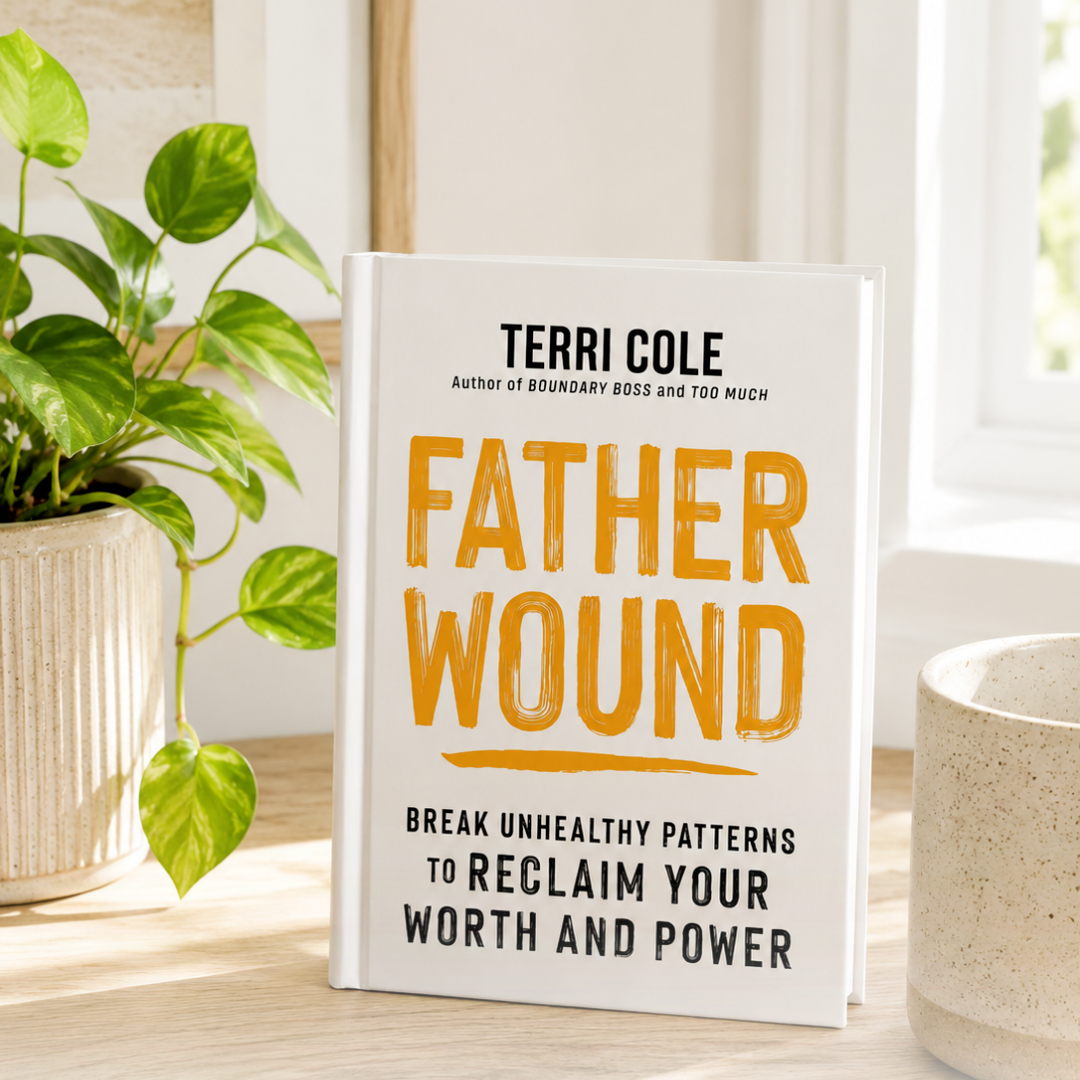
Discover how father-daughter injuries shape worth, boundaries, and relationships.
MEDIA KIT
Everything you need to bring the father wound conversation to your audience.

ABOUT TERRI
Short Bio:
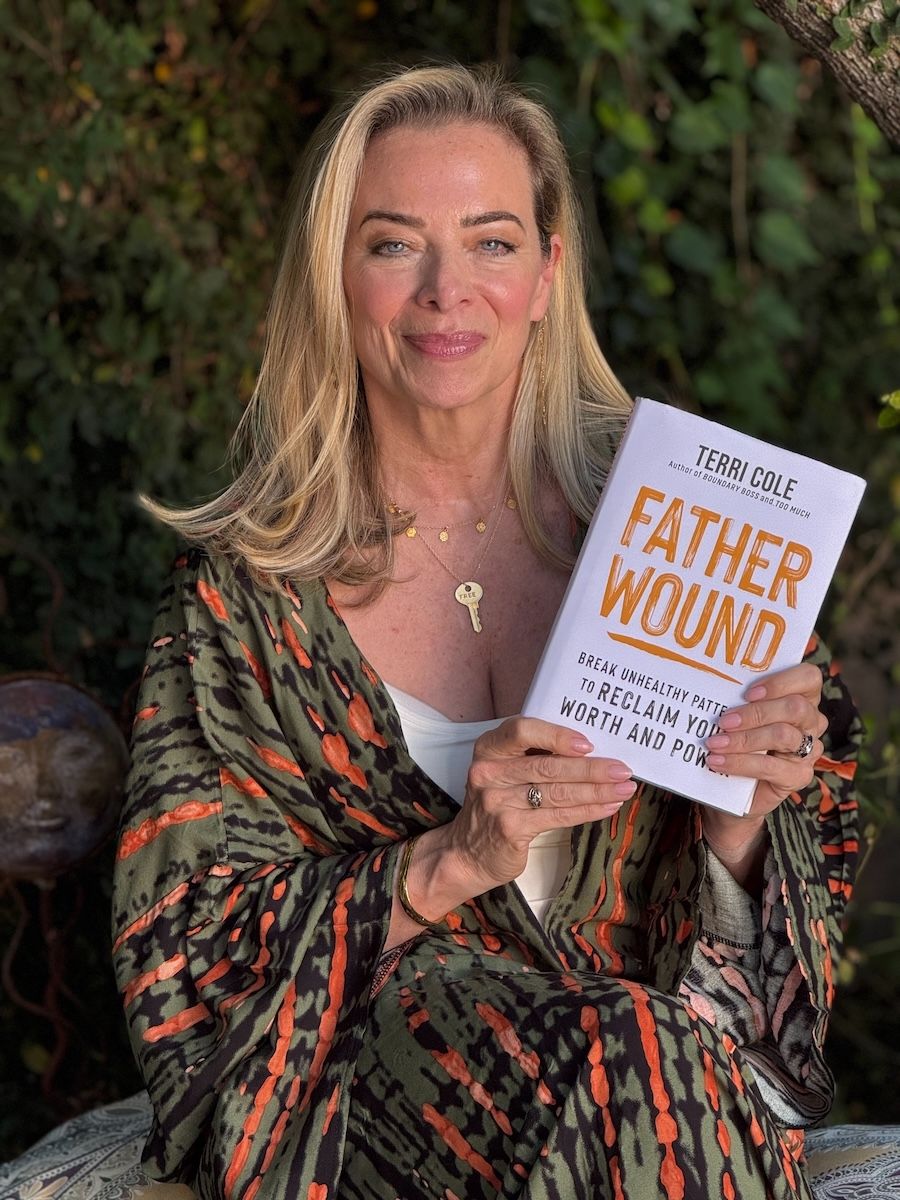
Terri Cole is a licensed psychotherapist and global relationship and empowerment expert and the author of Boundary Boss and Too Much!
For over two decades, Terri has worked with a diverse group of clients that includes everyone from stay-at-home moms to celebrities and Fortune 500 CEOs. She has a gift for making complex psychological concepts accessible and actionable so that clients and students achieve sustainable change.
She inspires over a million people weekly through her blog, social media platform, signature courses, and her popular podcast, The Terri Cole Show. For more, see terricole.com.
arrow_drop_down_circle
Divider Text
Long Bio
Terri Cole is a licensed psychotherapist and relationship expert based in New York. She is the author of 'Boundary Boss: The Essential Guide to Talk True, Be Seen, and host of the popular podcast The Terri Cole Show.
Before becoming an expert in love, boundaries, and codependency, Terri spent years as a bi-coastal talent agent negotiating endorsement contracts for supermodels and celebrities. However, her eventual disenchantment with the world of entertainment led her to make a career change in her 30s and become a psychotherapist and empowerment expert. Her mission has been to help women live self-determined lives that they love by teaching them how to establish and maintain healthy boundaries with ease and create and sustain vibrant relationships.
Over the past two decades, Terri has worked with a wide range of individuals, including international pop stars, athletes, Broadway performers, TV personalities, thought leaders, and Fortune 500 CEOs. She empowers a global community of over 800,000 individuals across 189 countries each week through her illuminating videos. articles and blog posts, therapeutic meditations, online courses, and podcast.
Terri's approach integrates practical psychology with eastern mindfulness practices, resulting in a unique blend that allows her to simplify complex psychological concepts for her clients and students. Her gift lies in making these concepts not only accessible but also actionable, leading to sustainable change.
Recognized as an expert therapist and master life coach, she has appeared on popular shows such as GMA3, The Doctors, and NBC News Daily, as well as being featured on the Real Housewives and hundreds of podcasts. She is a contributor to major publications including The Huffington Post, Well+Good, Oprah Daily, and Shondaland, and has been highlighted in People Magazine, The New York Times, Women’s Day, Glamour, Elle, Forbes, Vogue, Cosmopolitan, CNN, and Self. Learn more about her work at terricole.com
ABOUT THE BOOK
arrow_drop_down_circle
Divider Text
Millions of women have a father wound and don't know it has a name.
Sometimes there's overt abuse or abandonment, but more often, there's a gradual accumulation of absence, emotional unavailability, or disappointment that became normalized over time. Whether the wound was overt or subtle, these women may struggle with boundaries, over-give in relationships, or find it difficult to receive care from others. They may feel anxious around male authority or repeatedly choose partners who reinforce deep fears about their own worth.
At its core, a father wound is a worthiness wound,” writes Terri. “It’s where you learned that who you were wasn’t enough to earn the love and attention you needed, and that you had to be different, do more, or somehow be more to be worthy of receiving it.”
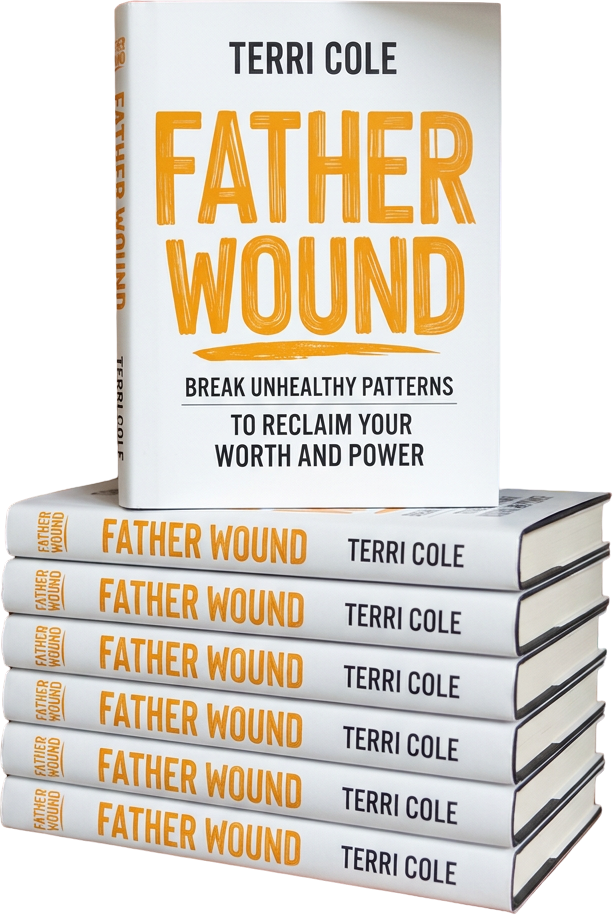
In Father Wound, psychotherapist Terri Cole brings her unique wisdom to this often-ignored personal and societal phenomenon, the first book of its kind on the impact of emotionally unavailable, absent, immature, or harmful father figures. Father wounds aren't just caused by abusive fathers, and they don't only apply to biological fathers. They can come from any father figure who was inconsistent, critical, emotionally unavailable, or unsafe.
This work is for you, and about you. Terri guides you back to the origin of your wound to uncover your unique Father Wound Blueprint, the deeply ingrained beliefs, values, and behaviors you downloaded from childhood experience, culture, society, and family. From there, the healing begins: mourning the father relationship you deserved, learning to reparent yourself, breaking intergenerational cycles, and reclaiming joy, pleasure, and sensuality.
Healing doesn't require your father's participation, presence, or approval. Only your own.
Ready to understand old wounds and reclaim your life?
SAMPLE INTERVIEW QUESTIONS
SAMPLE INTERVIEW QUESTIONS
There's more here than any one interview needs. That's intentional. Pick the 10-15 that fit your audience best, in any order. Short on time? The ★ questions make a complete episode on their own.
There's more here than any one interview needs. That's intentional. Pick the 10-15 that fit your audience best, in any order. Short on time? The ★ questions make a complete episode on their own.
★What is a father wound? How would someone know if they have one?
★What inspired you to write this book?
★We talk openly about mother wounds, but father wounds rarely get discussed. Why do you think that is?
★What would you say to the woman thinking, "But my dad wasn't that bad"?
★Does a woman need to involve her father to heal your father wound.
•You explain that father wounds don't only come from obvious abuse. What are some of the less recognized ways a father wound can happen?
•What are the most common signs of an unhealed father wound?
•What is on the other side healing?
•In the book, you share your own father wound. Can you tell us about your relationship with your father?
•What is a Father Wound Blueprint?
•You introduce a concept called "co-wounding." Can you explain what that is?
★You say the father wound can show up in all of our relationships, not just romantic ones. Can you say more about that?
•One of the symptoms of having a father wound is disordered boundaries. Can you say more about that?
•How does a father wound relate to high-functioning codependency? (The topic of your second book, Too Much)
•You say what protected us as children often becomes what limits us as adults. How do we recognize the survival strategies we're still unconsciously playing out?
•How does an unhealed father wound show up in romantic relationships and who we attract?
★Can you talk about how "mourning the dream" as a key part of healing?
•Why is learning to regulate your emotions such a big part of healing a father wound?
•What role does anger play in the healing?
•How are boundaries part of the fix?
•You write about reclaiming joy, pleasure, and even sensuality as part of becoming whole. Why are those essential to this healing?
★What's on the other side of this work? What becomes possible?
★For anyone listening what's the first step to heal their father wound.
★What's the ripple effect you hope this book creates?
•What did healing your own father wound teach you about love?
★Where can people buy Father Wound, and can you tell us about the book bonuses?
ADDITIONAL Q's FOR DATING & RELATIONSHIP AUDIENCES
•How does a father wound affect who we're attracted to?
•Why do so many women stay in relationships that don't serve them?
•How does a father wound shape our attachment style? Can that change?
•What changes in a woman's love life once she heals her father wound?
ADDITIONAL Q's FOR BUSINESS & MONEY AUDIENCES
•You say a father wound often hides inside highly successful women. How does that work?
•How does a father wound show up at work?
•Why do some women struggle with bosses and authority figures?
•How does a father wound affect our relationship with money?
ADDITIONAL Q's FOR INTERVIEWS THAT HAVE MALE AUDIENCES
•Do men have father wounds too?
•The book is written for women. What do you want men listening to take away from it?
•What would you say to a father who's worried he has wounded his daughter?
•For any dad listening, what can they do to ensure they are not wounding their daughter?
CONNECT WITH TERRI
CONNECT WITH TERRI
Website: terricole.com
Book website: fatherwoundbook.com
-----------------------------------
Instagram: https://www.instagram.com/terricole/
FB Page: https://www.facebook.com/TerriColeLCSW/
YouTube: https://www.youtube.com/user/terricoleny
Podcast: https://terricole.com/itunes
Book website: fatherwoundbook.com
-----------------------------------
Instagram: https://www.instagram.com/terricole/
FB Page: https://www.facebook.com/TerriColeLCSW/
YouTube: https://www.youtube.com/user/terricoleny
Podcast: https://terricole.com/itunes
Your father wound may be part of your origin story.
It does not get to decide how your story ends. You do.
Your father wound may be part of your origin story.
It does not get to decide how your story ends. You do.
© 2026 Terri Cole - All Rights Reserved - Terms of Service | Privacy Policy | TerriCole.com | Contact